
DTF's Fast Growth Comes with Some Growing Pains
The DTF industry has exploded over the last several years. Low equipment costs, affordable consumables, and the ability to print transfers for virtually any fabric have attracted everyone from side hustlers and startup apparel brands to large commercial print facilities.
Unfortunately, many new users enter the DTF market with unrealistic expectations of the technology.
Social media has created the perception that DTF printing is as simple as loading film, pressing print, and collecting money. The reality is that DTF is still an industrial digital inkjet process that combines mechanical systems, fluid dynamics, color management, software, environmental controls, and chemistry.
The print may look simple when it comes out of the machine, but the technology behind it is anything but simple.
At DTF Tech Gurus, we spend our days helping shops troubleshoot and optimize production environments. The biggest lesson we've learned is that successful DTF operators don't necessarily own the most expensive equipment—they understand the technology better than their competitors.
Understanding Where DTF Came From
Many of today's DTF operators never experienced the early days of DTG printing.
When DTG first entered the market, it was far from the polished technology it has become today. Shops struggled with:
- White ink settling
- Nozzle clogging
- Pretreatment consistency
- Color management
- Environmental control
- Software limitations
At the time, nobody really knew whether to blame the printer, the ink, the pretreatment, or the operator.
As Japanese manufacturers entered the DTG market, the technology matured significantly. Automated maintenance routines, improved RIP software, nozzle recovery systems, height sensors, and printhead protection systems reduced the amount of operator intervention required.
However, the technology still had limitations.
Ink prices often exceeded $200 per liter for Kornit DTG printers. Pretreatment added another consumable cost. Polyester printing remained difficult. Production speeds were relatively slow compared to traditional garment decoration methods. Keeping these machines was not inexpensive, printheads on the Kornit & Aeoon printers are quite expensive. So you better have an experienced, trained operator or a mistake can be very costly on those systems.
Then DTF entered the market.
Why DTF Disrupted the Industry So Quickly
DTF solved several major problems that had limited DTG adoption.
DTF offered:
- Lower consumable costs
- No pretreatment
- Polyester compatibility
- Faster production workflows
- Simpler decoration of difficult garments
- And better longevity of prints compared to DTG
From a technical standpoint, DTF removed one of the largest variables in digital garment decoration: the garment itself.
Instead of trying to control pretreatment application, fabric absorbency, garment moisture content, and curing variables, DTF shifted production to a controlled transfer process.
This simplified workflow accelerated adoption throughout the industry.
The Chinese Manufacturing Advantage
There is often a misconception that Chinese manufacturers entered the DTF market as innovators. In reality, their greatest strength has traditionally been manufacturing efficiency.
By the time DTF gained traction:
- DTG inks often exceeded $200 per liter.
- DTF inks could be manufactured for a fraction of that cost.
- DTF eliminated pretreatment expenses.
- Equipment costs were dramatically lower.
At the same time, Chinese manufacturers embraced direct-to-consumer sales models.
For the first time, decorators could purchase industrial printing equipment directly from factories without traditional distribution channels adding markup.
This dramatically lowered the barrier to entry.
The result was an explosion of printer manufacturers and private-label brands.
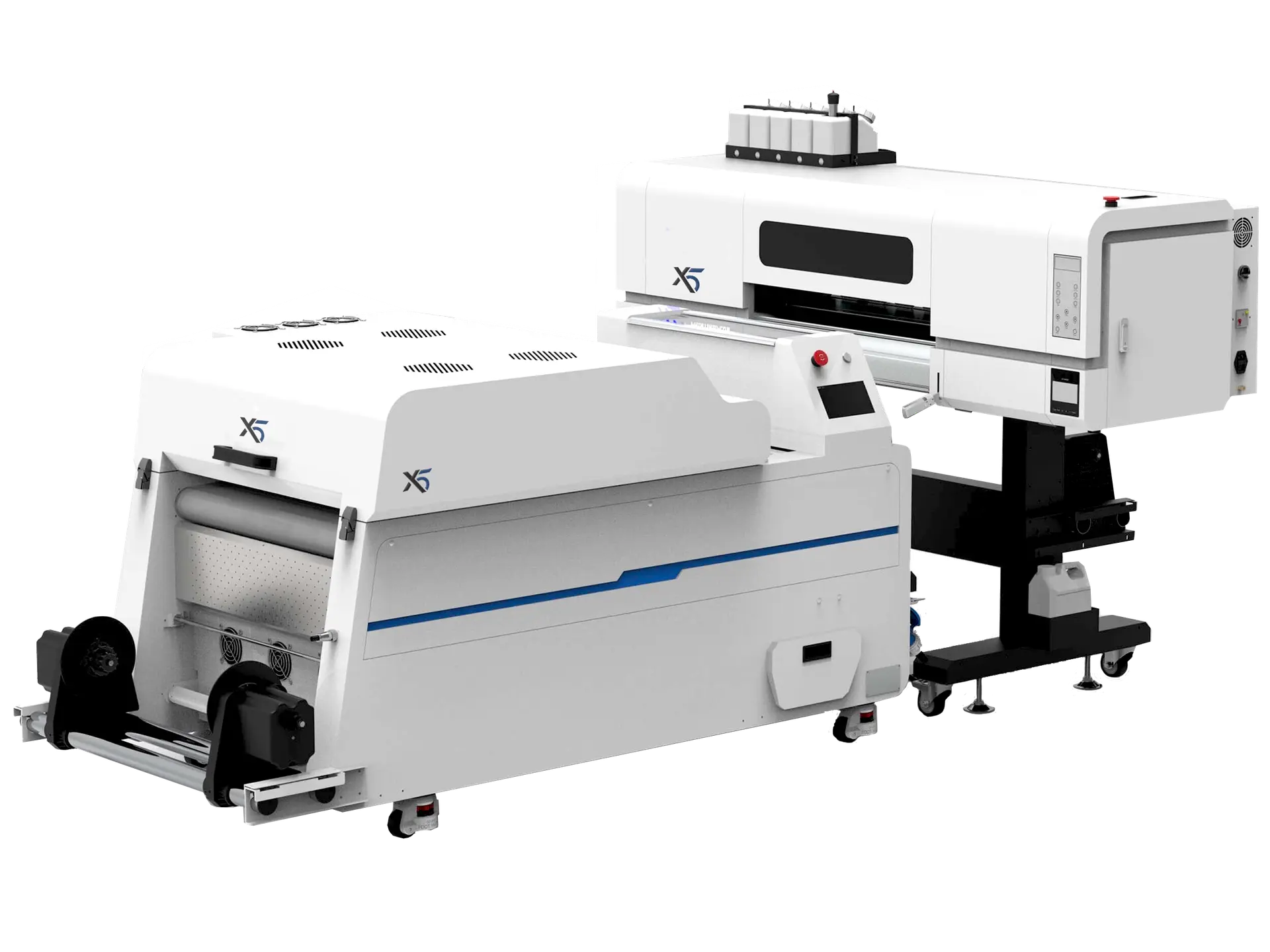
Today, many DTF systems share similar core technology:
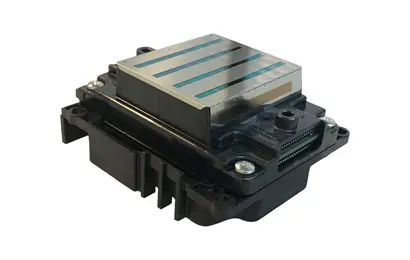
- Epson printheads
- Similar motion systems
- Similar electronics
- Similar firmware architecture
- Similar powder application systems
The machine may have a different cabinet, software interface, or brand name, but the underlying technology is often very similar.
 Why DTF Is Not a Plug-and-Play Technology
One of the most common misconceptions we see is the belief that DTF printing should require little or no maintenance.
This expectation usually comes from people entering digital printing for the first time.
The reality is that DTF combines several complex systems:
Ink Chemistry
DTF ink is not simply colored liquid.
White ink contains high concentrations of titanium dioxide pigment that constantly wants to settle.
Operators must manage:
- White ink agitation
- Ink recirculation
- Sediment control
- Filter maintenance
- Damper maintenance
Ignoring these systems eventually leads to opacity issues, nozzle loss, and printhead failures.
Mechanical Systems
Modern DTF printers contain:
- Encoder systems
- Servo motors
- Linear rails
- Carriage bearings
- Media feed systems
- Cap stations
- Wiper assemblies
Each system requires regular inspection and maintenance.
Environmental Controls
Environmental conditions directly affect:
- Ink viscosity
- Powder performance
- Static generation
- Nozzle reliability
- Color consistency
Many print quality issues that operators attribute to equipment are actually environmental problems.
Software and Color Management
Every DTF workflow relies on multiple software layers:
- RIP software
- ICC profiles
- Linearization curves
- Ink restrictions
- White underbase settings
A machine can be mechanically perfect and still produce poor output if the software workflow is incorrect.
The Industrial Equipment Myth
Many decorators assumed that when Japanese and European manufacturers entered the DTF market, all maintenance and reliability concerns would disappear.
While these manufacturers have introduced excellent systems, the reality is more complicated.
Many of these machines offer:
- Better automation
- Improved sensors
- More refined software
- Enhanced safety features
However, they also introduce challenges such as:
Higher Operating Costs
Premium manufacturers typically utilize proprietary inks and consumables.
While the technology may be refined, operating costs often increase significantly.
Limited Service Networks
Many manufacturers require service through authorized technicians.
This can create:
- Longer downtime
- Higher service costs
- Increased travel expenses
Integration Challenges
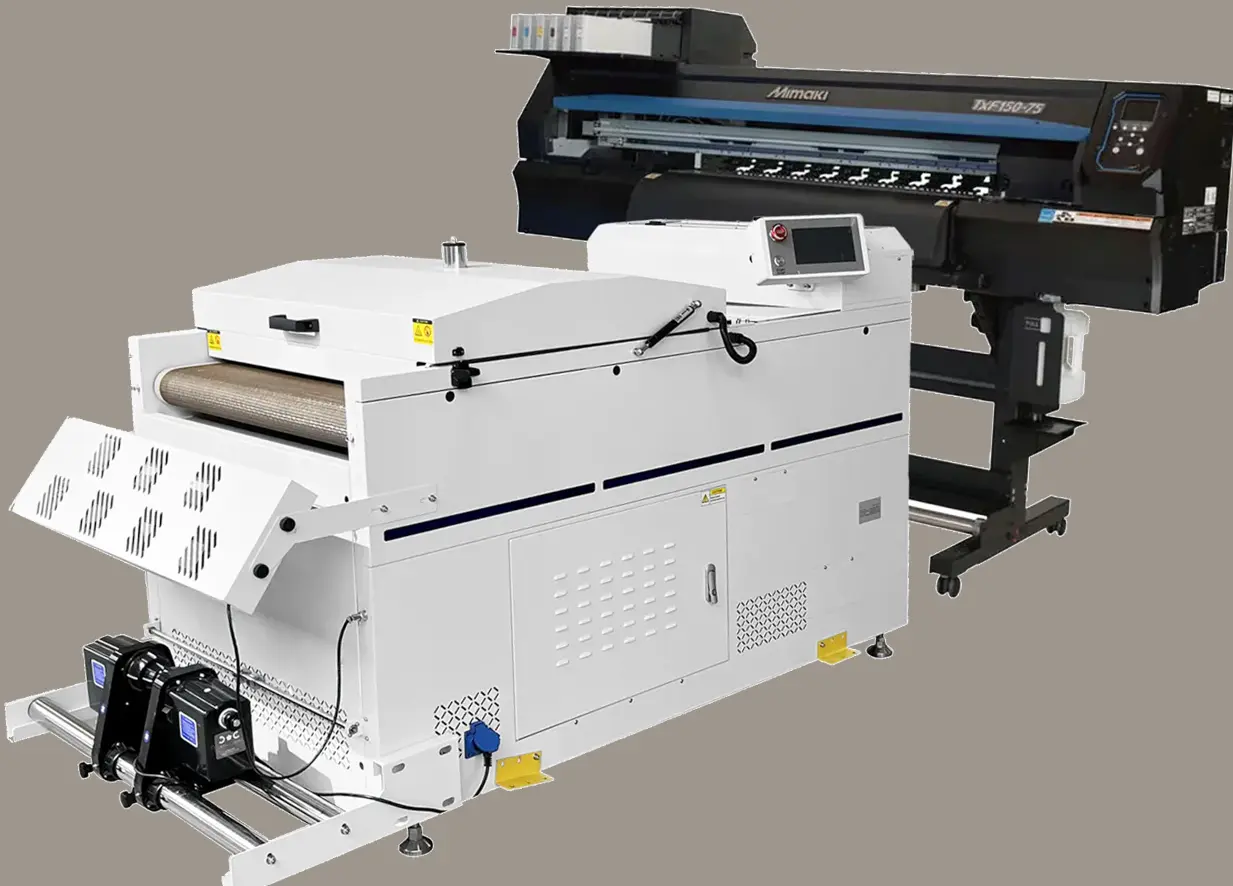
One issue rarely discussed in the industry is the separation between printers and dryers.
Most DTF printer manufacturers do not manufacture their own powder shaker and dryer systems.
As a result:
- The printer may come from one manufacturer.
- The dryer may come from another.
- The RIP software may come from a third company.
When production issues arise, identifying the root cause becomes more difficult.
We've seen situations where:
- The printer manufacturer blames the dryer.
- The dryer manufacturer blames the printer.
- The RIP provider blames the profile.
Meanwhile, the customer is still trying to fulfill orders.
The Real Difference Between Successful Shops and Struggling Shops
After supporting thousands of printers, we've noticed a consistent trend.
The most successful operators understand their equipment.
The least successful operators depend entirely on technical support.
Every industrial digital printing technology requires operator knowledge.
This applies to:
- DTF
- DTG
- UV printing
- Textile printing
- Wide-format graphics
- Commercial presses
Even facilities running million-dollar printing equipment have operators trained to:
- Diagnose issues
- Perform maintenance
- Monitor production quality
- Maintain environmental conditions
No manufacturer expects equipment to run indefinitely without maintenance.
The Automotive Comparison
Think about how most people treat their vehicles.
Nobody expects a vehicle to perform flawlessly after:
- Ignoring oil changes
- Running low tire pressure
- Using poor-quality fuel
- Skipping preventative maintenance
Yet many DTF operators expect exactly that from their printer.
Printheads are precision electronic devices.
Cap stations are wear items.
Pumps eventually fail.
Filters become restricted.
Bearings wear.
Maintenance is not a sign of poor equipment design—it is a requirement of industrial machinery.
What You Should Actually Look For When Buying a DTF Printer
Most buyers focus on:
- Speed
- Resolution
- Price
Those specifications matter, but they are rarely the deciding factor in long-term success.
Instead, ask these questions.
How Strong Is the Technical Support Team?
Before purchasing, call technical support.
Ask technical questions.
Find out:
- Who answers the phone?
- Do they understand the equipment?
- Can they explain maintenance procedures?
Support quality becomes obvious very quickly.
What Training Resources Exist?
Look for:
- User guides
- Service manuals
- Video training
- Maintenance documentation
- Troubleshooting resources
The more documentation available, the easier your ownership experience will be.
Where Are Parts Located?
A printer is only as good as the availability of replacement parts.
Ask:
- Are parts stocked domestically?
- What are average shipping times?
- Are emergency parts available?
Who Supports the Entire Workflow?
Ideally, your support team should understand:
- Printer operation
- Dryer operation
- RIP software
- Ink chemistry
- Transfer production
Many companies can support one piece of the workflow but struggle to support the entire production system.
 Buying Direct from China: Understanding the Tradeoffs
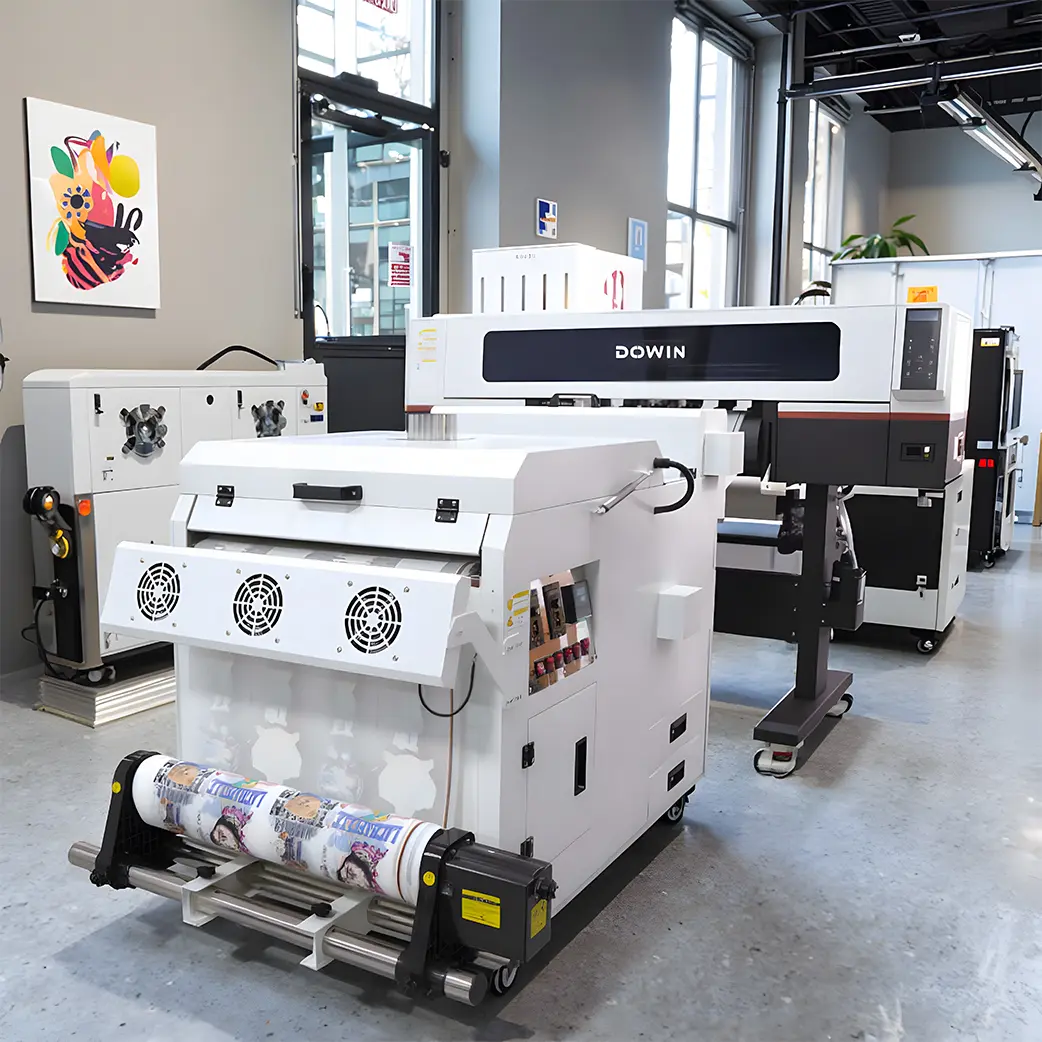
We are not suggesting that buyers avoid purchasing directly from Chinese manufacturers.
Many factories produce excellent equipment.
However, buyers should understand the realities.
Challenges may include:
- Language barriers
- Time zone differences
- Delayed communication
- Self-service troubleshooting
- Limited training resources
For technically inclined operators, these tradeoffs may be acceptable.
For shops new to digital printing, local support and training may be worth the additional investment.
Final Thoughts
The DTF industry has created opportunities that simply did not exist a decade ago. Entry costs are lower, consumables are more affordable, and production flexibility is greater than ever before.
However, DTF is not a magic business model.
It is an industrial digital printing technology that requires operators to understand:
- Ink chemistry
- Mechanical systems
- Environmental controls
- Software workflows
- Preventative maintenance
Whether you purchase a Chinese-built printer, a Japanese-built printer, or a European-built printer, your long-term success will depend less on the logo on the machine and more on your willingness to learn the technology.
The shops that thrive in DTF are rarely the ones with the most expensive equipment.
They are the ones that understand how their equipment works, maintain it properly, and continuously educate themselves on the process.
That's the difference between expectations and reality in DTF printing.