
Why Capping Stations Fail and What It Means for Your Printhead
In the DTF printing industry, there is a common misconception that printheads are the most frequently replaced component on a printer. While printheads are often the most expensive replacement item, the reality is that the capping station assembly is typically the most commonly replaced maintenance component across all levels of DTF equipment.
From entry-level desktop printers to industrial production systems, capping station failures are responsible for a significant percentage of print quality issues, nozzle loss, ink starvation problems, and ultimately premature printhead replacement.
Understanding why capping stations fail—and how they affect the entire ink delivery system—can save operators thousands of dollars in repair costs and lost production.
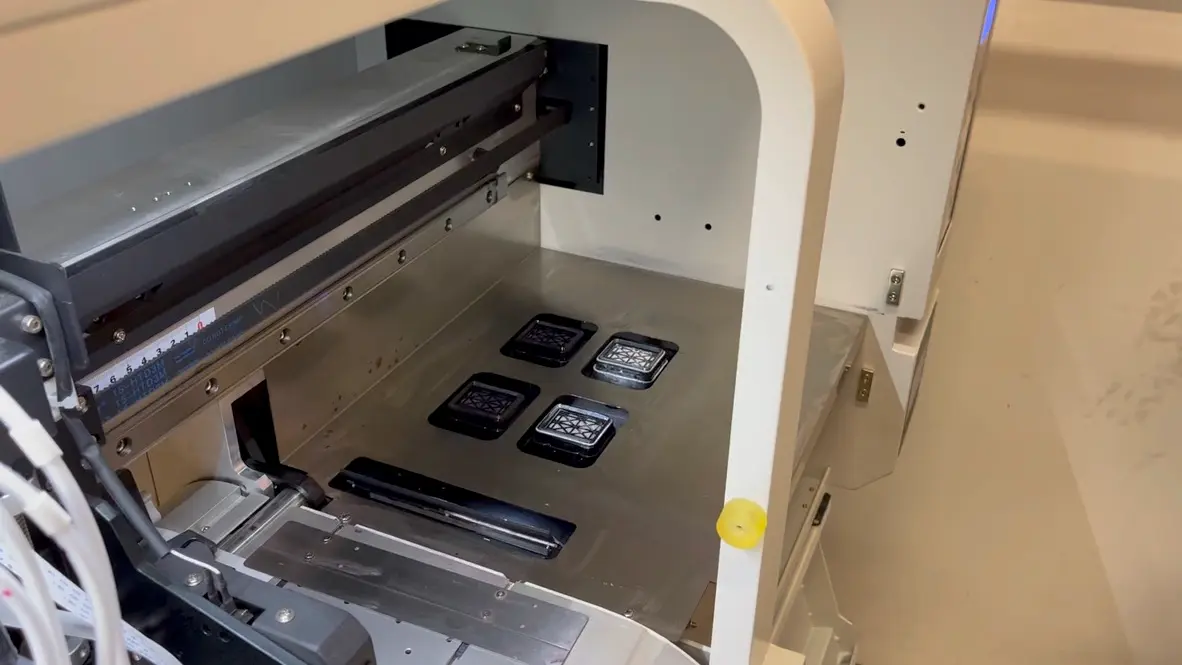
What Does a Capping Station Do?
The capping station serves several critical functions:
- Seals the printhead when the printer is idle
- Prevents ink from drying inside the nozzles
- Creates vacuum during cleaning cycles
- Assists with ink circulation and recovery
- Protects the printhead from air intrusion
Think of the capping station as the foundation of the printer's maintenance system. If the seal between the cap and printhead is compromised, the entire system begins to suffer.
Why Capping Stations Fail More Than Any Other Component
1. Constant Exposure to Ink
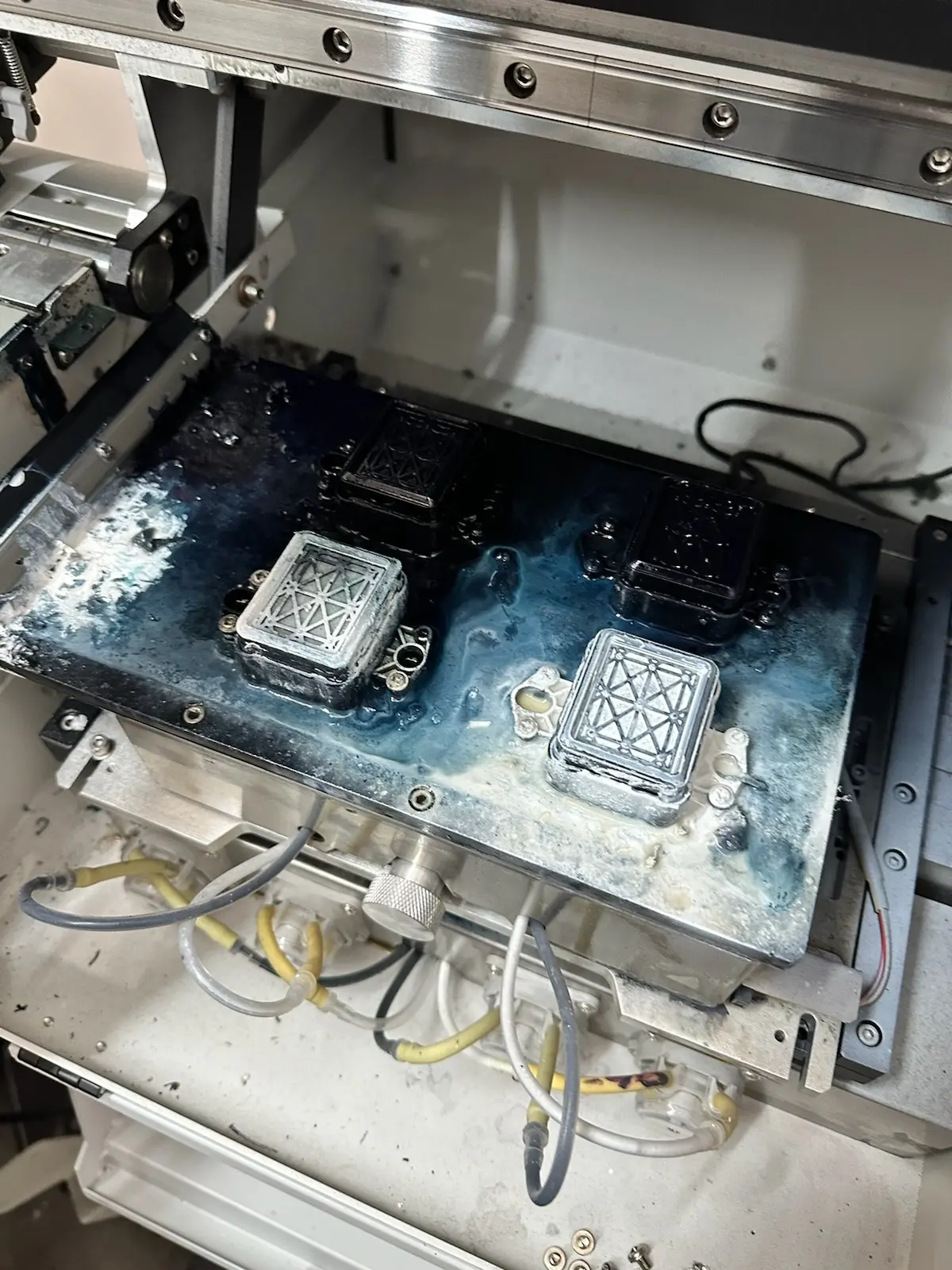
DTF white ink contains heavy pigment loads that continuously pass through the maintenance system.
Over time:
- Ink accumulates inside the cap top
- Pigment settles in drainage channels
- Dried ink builds up on sealing surfaces
- Internal passages become restricted
Unlike many printer components that only operate during production, the capping station is exposed to ink nearly every day the machine is running.
2. Chemical Exposure
Cleaning solutions and maintenance fluids help keep printers operational, but they also contribute to wear.
The rubber seals inside cap tops are continuously exposed to:
- Cleaning solutions
- Moisture
- Ink pigments
- Waste ink contaminants
Eventually these materials harden, swell, crack, or lose their elasticity.
Once this occurs, the cap can no longer form a proper seal against the printhead.
3. Mechanical Wear
Every cleaning cycle creates movement.
The capping station repeatedly:
- Raises and lowers
- Contacts the printhead
- Supports vacuum generation
- Endures vibration from printer operation
Over thousands of cycles, mechanical components naturally wear out.
4. Lack of Preventive Maintenance
Perhaps the biggest reason capping stations fail is simple neglect.
Many operators focus on production and overlook routine maintenance tasks such as:
- Cleaning the cap top
- Inspecting seals
- Checking vacuum performance
- Removing dried ink buildup
When maintenance is skipped, performance gradually declines until print quality issues appear.
The Hidden Cost of a Failed Capping Station
A worn capping station rarely causes immediate printer failure.
Instead, it creates a chain reaction of problems:
Poor Nozzle Recovery
When the cap cannot create proper vacuum, cleaning cycles become ineffective.
Operators begin seeing:
- Missing nozzles
- Deflected nozzles
- Inconsistent nozzle checks
Increased Head Cleanings
To compensate for poor recovery, users often run additional cleaning cycles.
This wastes:
- Ink
- Time
- Production capacity
It also places additional stress on the printer.
Air Intrusion
A damaged seal allows air to enter the ink system.
Air bubbles can lead to:
- Ink starvation
- Color inconsistency
- Dropout during printing
- Head strikes caused by improper ink flow
Premature Printhead Failure
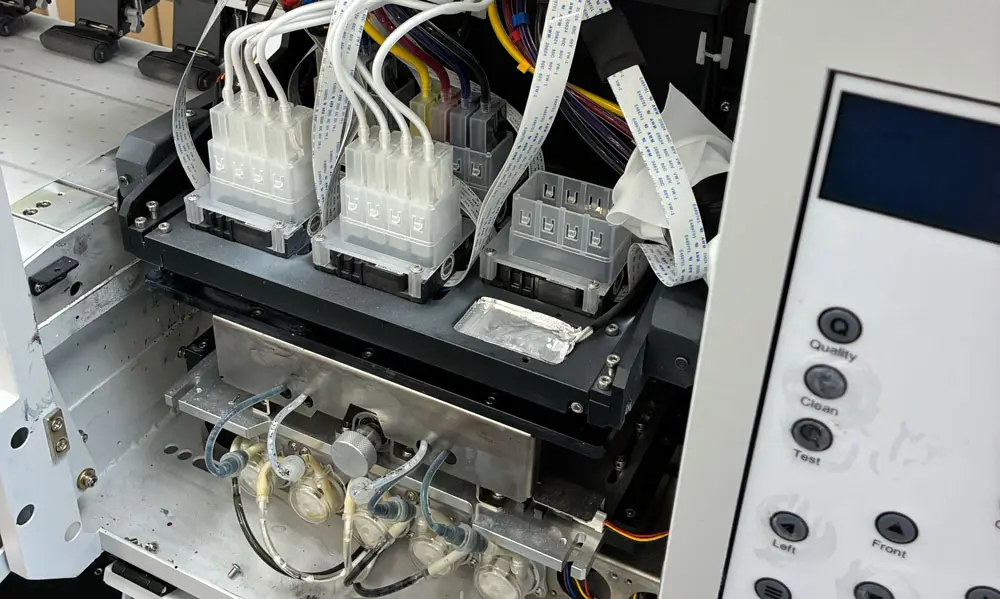
This is where costs become significant.
Many printheads that are labeled as "failed" were actually victims of maintenance system problems.
When a printhead repeatedly runs dry, loses vacuum, or experiences poor circulation, permanent damage can occur.
A $20-$100 maintenance component can eventually contribute to a printhead replacement costing hundreds or even thousands of dollars.
Warning Signs Your Capping Station Needs Replacement
Operators should watch for:
- Persistent nozzle loss
- Difficulty recovering nozzles
- Excessive cleaning cycles
- Ink leaking around the cap
- Poor vacuum during maintenance
- Hardened or damaged rubber seals
- Uneven contact with the printhead
- Ink buildup that cannot be cleaned effectively
These symptoms often appear long before complete failure occurs.
Preventing Failure
The best way to extend capping station life is through routine maintenance.
Recommended practices include:
Daily
- Clean excess ink from the cap top
- Inspect the sealing surface
- Remove dried ink deposits
Weekly
- Verify vacuum performance
- Inspect drain lines
- Check for hardened rubber components
Monthly
- Inspect cap alignment
- Verify proper contact with the printhead
- Evaluate overall wear
Scheduled Replacement
Treat capping stations as consumable maintenance items rather than permanent components.
Replacing a worn cap top before it fails completely is far less expensive than replacing a damaged printhead.
Final Thoughts
The capping station may not be the most expensive part on a DTF printer, but it is arguably the most important maintenance component. It protects the printhead, supports proper ink flow, enables effective cleaning cycles, and helps maintain print quality.
When operators neglect the capping station, the consequences eventually spread throughout the entire printer. Nozzle loss, air intrusion, wasted ink, production downtime, and printhead failure can often be traced back to a maintenance system that was no longer functioning properly.
In DTF printing, the most expensive repairs often begin with the smallest maintenance items. Taking care of the capping station is one of the simplest and most effective ways to protect your investment and maximize printer uptime.