
White ink is one of the most essential—and frustrating—components in DTF printing. If you’ve ever dealt with inconsistent prints, missing layers, or complete nozzle blockages, chances are your white ink is the culprit. Unlike standard CMYK inks, white ink behaves very differently, requiring more attention, maintenance, and understanding to keep your printer running smoothly.
Let's just say it - Printing white ink digitally is a fairly new process. Digital white ink printing started becoming commercially viable in the mid-2000s, particularly with the rise of UV and specialty inkjet printers.
White ink became even more widespread in the 2010s with the growth of:
- DTG (Direct-to-Garment) printing
- More recently - DTF (Direct-to-Film) printing
In this guide, we’ll break down exactly why white ink clogs, what causes these issues, and most importantly, how you can prevent them to maintain consistent, high-quality prints.
Why White Ink Is So Problematic
White ink is unique because it contains titanium dioxide, a heavy pigment responsible for its opacity. While this is what makes white ink effective for printing on dark garments, it also introduces several challenges:
- It settles quickly: The heavy particles sink to the bottom if not constantly agitated.
- It’s denser than CMYK inks: This makes it harder to keep flowing evenly through the system.
- It requires continuous circulation: Without movement, the ink can separate and thicken, leading to clogs. But we will say this, most units have a flat bottom with the recirculation point coming out the side. This means that the white tank should be periodically removed and cleaned to make sure sediment is removed from accumulating in the bottom of the tank.
Because of these properties, white ink is not passive—it demands active management.
Main Causes of White Ink Clogging
Understanding the root causes of clogging is the first step toward preventing it. Here are the most common reasons your white ink may be failing:
1. Ink Settling in the System
(why inks settle - read our article on How DTF Inks are Manufactured)
When white ink sits idle, the titanium dioxide particles begin to settle at the bottom of cartridges, lines, and dampers. Over time, this creates a dense sediment that restricts flow and eventually blocks nozzles.
Key issue: Lack of agitation leads to uneven ink consistency and buildup.
2. Poor Ink Circulation
Many DTF printers rely on circulation systems to keep white ink moving. If this system is weak, inconsistent, or not used properly, ink can stagnate in the lines. If you are purchasing a DTF printer that doesn't have a white recirculating system, be prepared to have issues with your printheads!
Result: Ink begins to dry internally, forming clogs that are difficult to clear without deep cleaning.
3. Low Printer Usage
DTF printers perform best when used regularly. Long periods of inactivity allow white ink to settle and thicken inside the printhead and tubing.
Important note: Even a few days of inactivity can increase the risk of clogging, especially in warmer or drier environments.
4. Bad Dampers or Ink Lines
(Why Dampers are so Important to your DTF Printer)
Over time, residue from white ink builds up inside dampers, filters, and ink lines. This restricts flow and can introduce air bubbles or inconsistent pressure.
Consequence: Reduced print quality, banding, or complete ink blockage.
How to Prevent White Ink Clogging
The good news is that most white ink issues are preventable with a consistent maintenance routine. Here’s how to keep your system running smoothly:
 Daily Ink Agitation
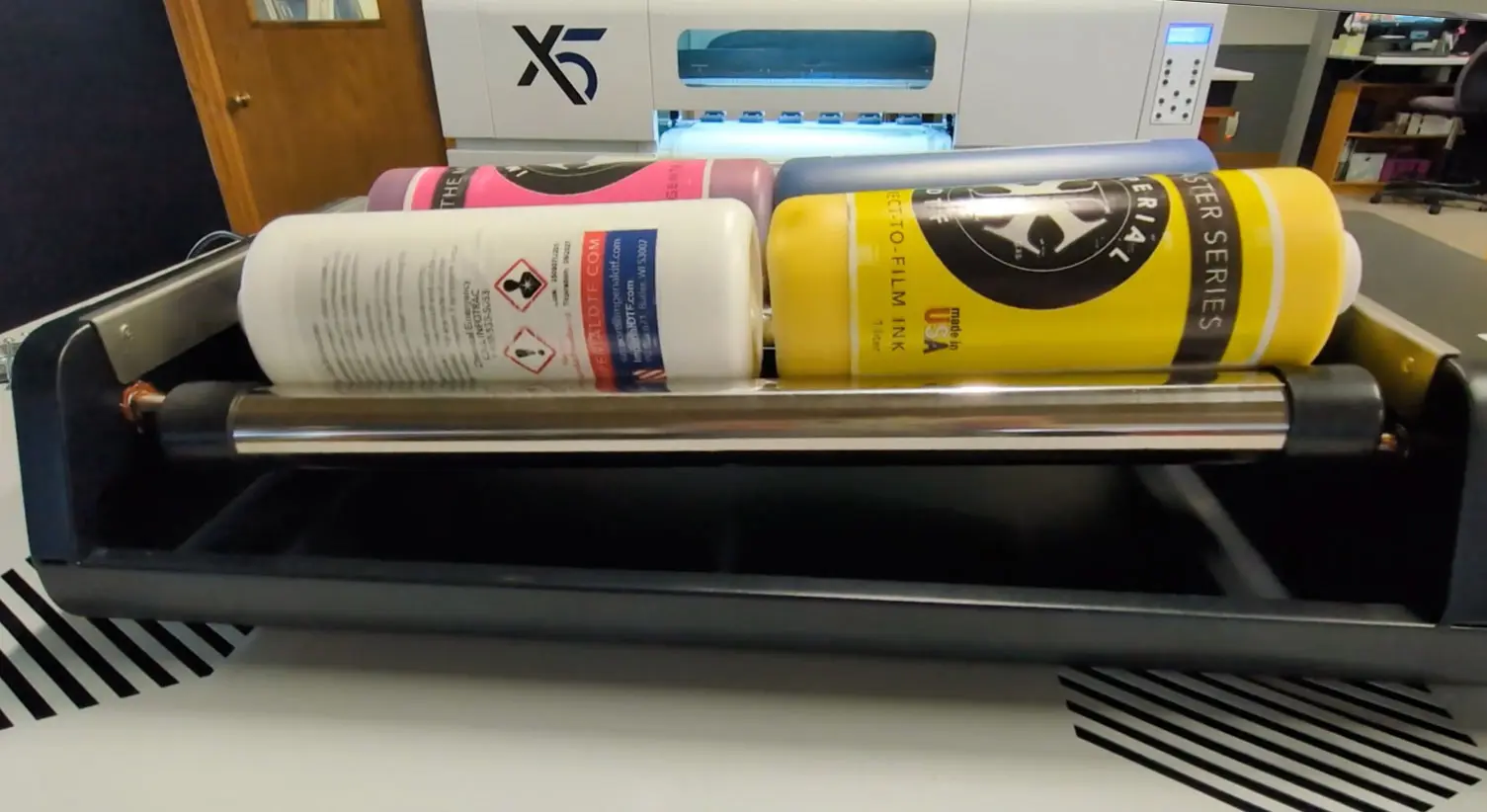
Manually shake your white ink cartridges or tanks daily, or we recommend getting the ImperialDTF "Rock n Roll" Ink mixer, or something similar. This keeps the titanium dioxide evenly distributed and prevents settling in the white ink.
Perform Regular Nozzle Checks
(this is a must - check out how often they are needed)
Running daily nozzle checks helps you catch clogs early before they become severe. Addressing minor blockages immediately is much easier than dealing with a fully clogged printhead.
Maintain Continuous Circulation
If your printer includes a white ink circulation system, keep it running as recommended by the manufacturer. This ensures the ink stays in motion and reduces sediment buildup.
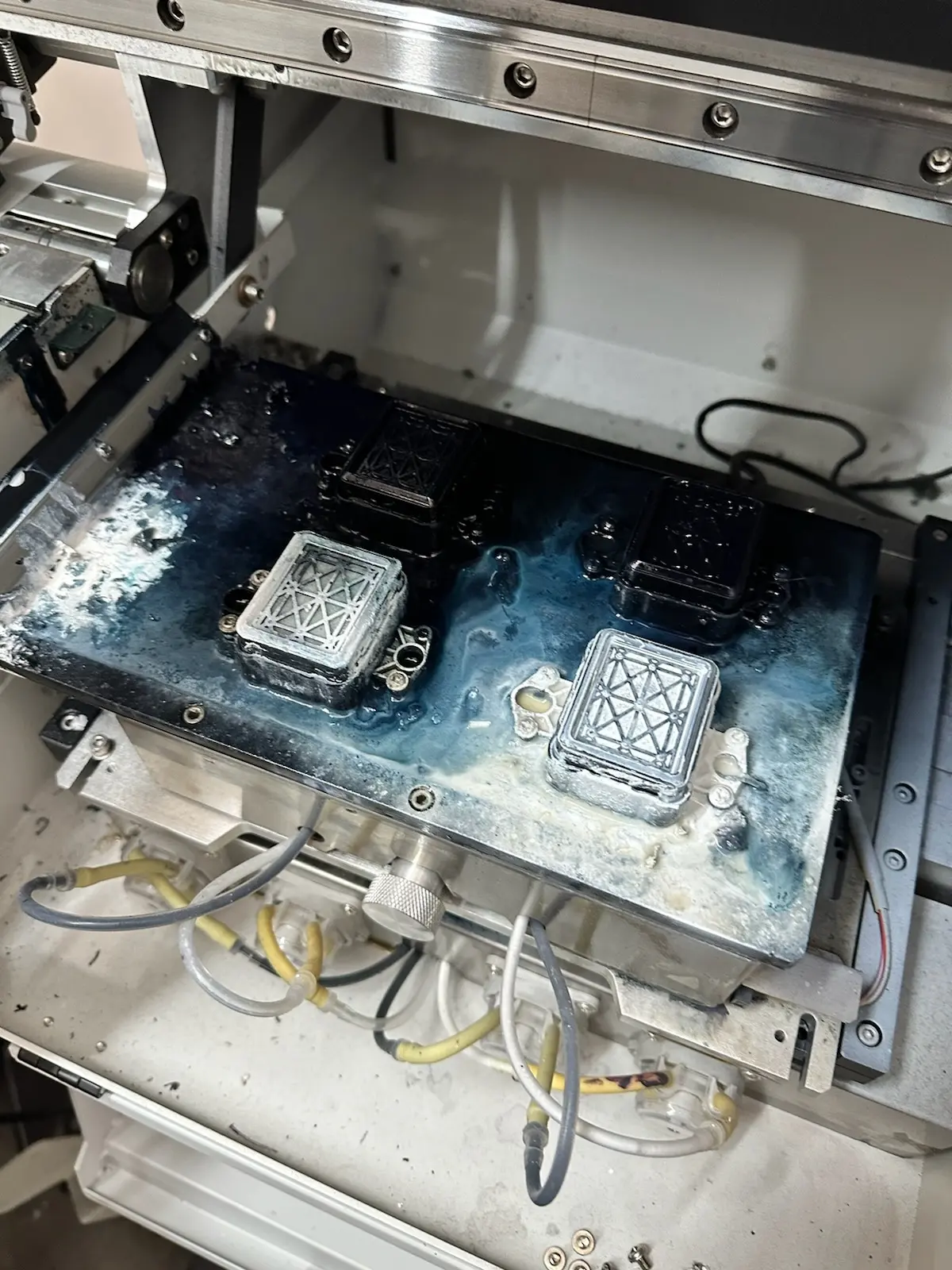
Keep Your System Clean
Regularly inspect and clean:
- Dampers
- Ink lines
- Capping stations
Replacing worn or dirty components before they fail can save you significant downtime and repair costs.
Print Consistently
Try to use your printer daily, even if it’s just a small test print. Regular usage keeps ink flowing and prevents it from settling inside critical components.
Final Takeaway
White ink is not a “set it and forget it” component of DTF printing—it’s a managed system that requires routine care and attention. By understanding how it behaves and implementing a proactive maintenance routine, you can drastically reduce clogging issues, extend the life of your printhead, and ensure consistent, high-quality results.
A little daily effort goes a long way in keeping your white ink flowing—and your production running without interruptions.