
Mastering DTF Heat Pressing: Equipment, Settings & Pro-Level Results
In Direct-to-Film printing, the heat press stage is where everything comes together—or falls apart. Even with perfect prints, poor pressing technique or subpar equipment can lead to adhesion failure, scorching, or inconsistent results. This guide breaks down how to choose the right heat press and dial in settings specifically for reliable, production-level DTF transfers.
Selecting the Right Heat Press for DTF
Manual vs. Pneumatic Presses
When it comes to heat presses, there’s no shortage of options—but not all are ideal for DTF workflows.
Manual clamshell presses are often the preferred choice for experienced operators. Why? They offer:
- Direct, tactile control over pressure
- Faster cycle times without waiting on air systems
- Greater consistency in shops without regulated air supply
Pneumatic (air-operated) presses can work well in certain environments, but they come with trade-offs:
- Slower open/close cycles in many models
- Pressure inconsistency if air supply fluctuates
- Higher maintenance, especially if moisture enters the system
If you do run a pneumatic press, clean and dry air is essential to avoid long-term damage and performance issues.
Build Quality Matters More Than You Think
Not all presses are built the same, and small design differences can have a big impact over time.
- Control Panel Placement: Avoid presses with electronics mounted directly above the heated platen. Excessive heat exposure can degrade wiring and shorten the lifespan of circuit boards.
- Certifications & Manufacturing Standards: Units built to UL and CE standards typically offer better safety and reliability.
- Durability: A solid frame, quality components, and accessible replacement parts are critical for minimizing downtime in production environments.
Must-Have Features for Efficient Production
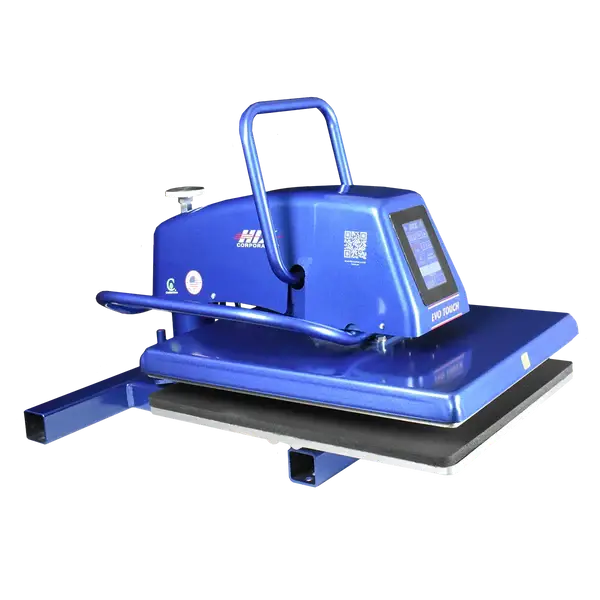 Slide-Out or Swingaway Platens
These improve workflow by allowing you to load garments safely and accurately without reaching under a hot platen and burning your knuckles.
Laser Alignment Systems
Helpful for consistent placement—especially on tricky locations like left chest prints. Affordable options are widely available and can significantly reduce misprints.
Serviceability & Support
Downtime costs money. Choose equipment that includes:
- Clear operation manuals
- Electrical schematics
- Easily sourced replacement parts
Understanding Heating Configurations
Some heat presses offer dual heating (top and bottom platens), which can reduce dwell time—but there’s a catch.
While bottom heat can speed up production, it may interfere with hot-peel transfers. The retained heat keeps the adhesive in a molten state, making clean peeling more difficult.
If you’re using a dual-heated press:
- Be prepared to remove the garment from the press before peeling
- Test thoroughly with your specific film and powder combination
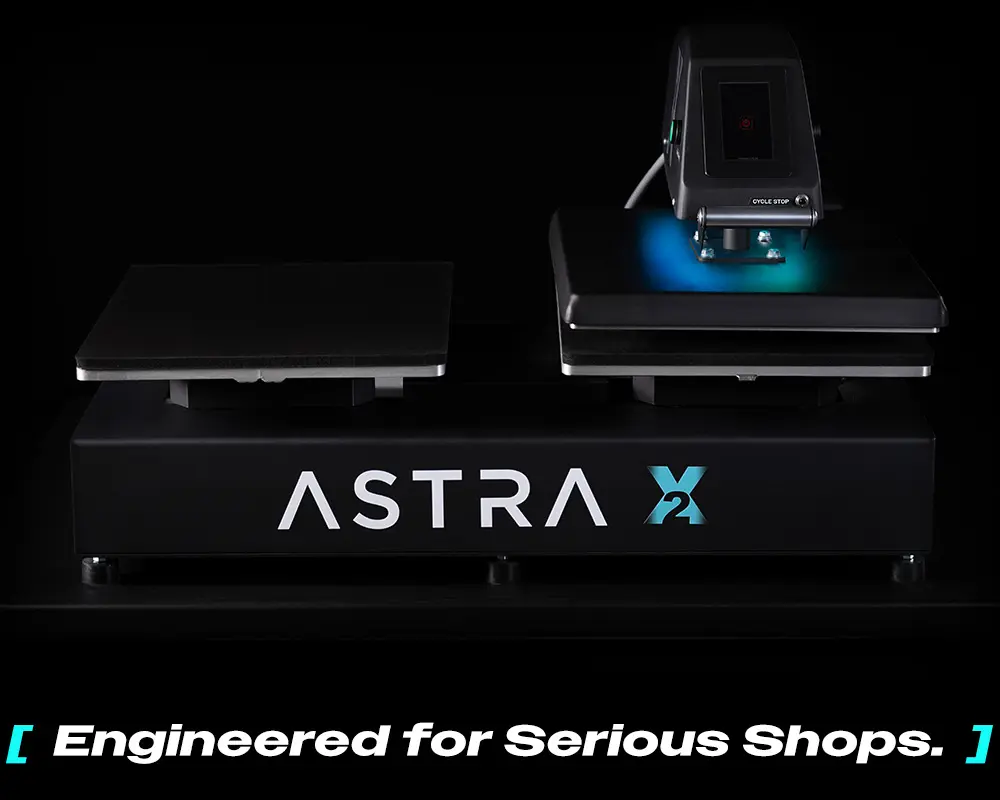
You really should check out the new heat press from HIX called the ASTRA X2 Dual Platen Heat Press for under $4000!
Recommended DTF Press Settings
Dialing in the correct time, temperature, and pressure is essential for consistent results.
General baseline settings:
- Cotton & Cotton Blends
- Temperature: 285°F
- Time: 10 seconds
- Pressure: Medium to firm (~30 lbs equivalent)
- Polyester Garments
- Temperature: 265°F
- Time: 6–8 seconds
- Pressure: Light to medium (~15 lbs equivalent)
These are starting points—always test based on your film, adhesive powder, and garment type.
Pro Tips for Better Transfers
- Use Fitted Teflon Sheets: Mounting top and bottom sheets eliminates the need to handle loose sheets every cycle and improves consistency.
- Teflon Pillows for Uneven Surfaces: Essential for youth garments or areas with seams, zippers, or buttons to ensure even pressure.
- Fine Detail & Warm Peel Films: Consider using a heat speeder or pre-press technique to stabilize delicate designs and improve workflow speed.
A high-quality DTF transfer doesn’t end at the printer—it’s finalized at the heat press. Choosing the right equipment, understanding how heat and pressure interact, and dialing in your settings will dramatically improve consistency, efficiency, and print durability.
If you're serious about scaling DTF production, your heat press setup isn’t just a tool—it’s a competitive advantage.